Discount Calculator: How to Calculate the Discount Rate and Final Price
Discounts are everywhere in shopping. This guide explains how to calculate the discount amount, final price and discount rate. Try the discount calculator.
Final price after discount
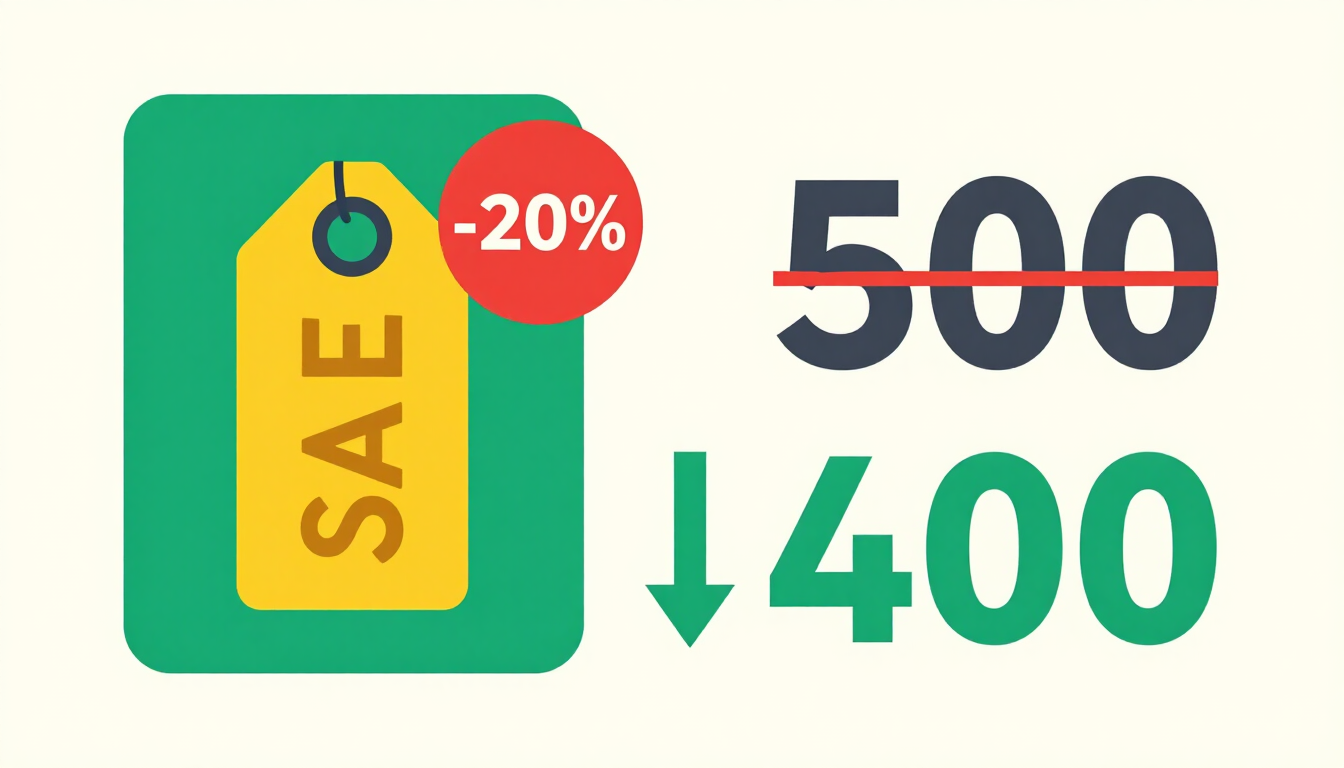
Discount amount = original × rate ÷ 100; final = original − discount. E.g. 20% off 500: discount 100, final 400. Or directly: 500 × (1 − 0.20) = 400.
Discount rate from two prices
Rate = ((original − final) ÷ original) × 100. E.g. original 500, final 400 → (100 ÷ 500) × 100 = 20%.
Sequential discounts
20% then 10%: 100 × 0.8 = 80; 80 × 0.9 = 72; effective discount = 28%, not 30%.
Shopping tips
- Compare the final price, not just the discount rate.
- Watch for sequential discounts.
- Use the calculator to verify deals.
Frequently Asked Questions
How do I calculate the final price after a discount?
Final price = original × (1 − discount rate ÷ 100). E.g. 20% off 500 = 500 × 0.8 = 400.
How do I find the discount rate from two prices?
Rate = ((original − final) ÷ original) × 100.
Can I combine two discounts?
Sequential discounts apply one after another on the post-discount price, not by adding the rates. 20% then 10% = 28% effective, not 30%.
What is the difference between a discount and a rebate?
A discount reduces the price at purchase; a rebate is money returned after purchase.
Related Calculators
Subscribe for new calculators & articles
We send you new calculators and articles as they arrive — no spam, and you can unsubscribe anytime.